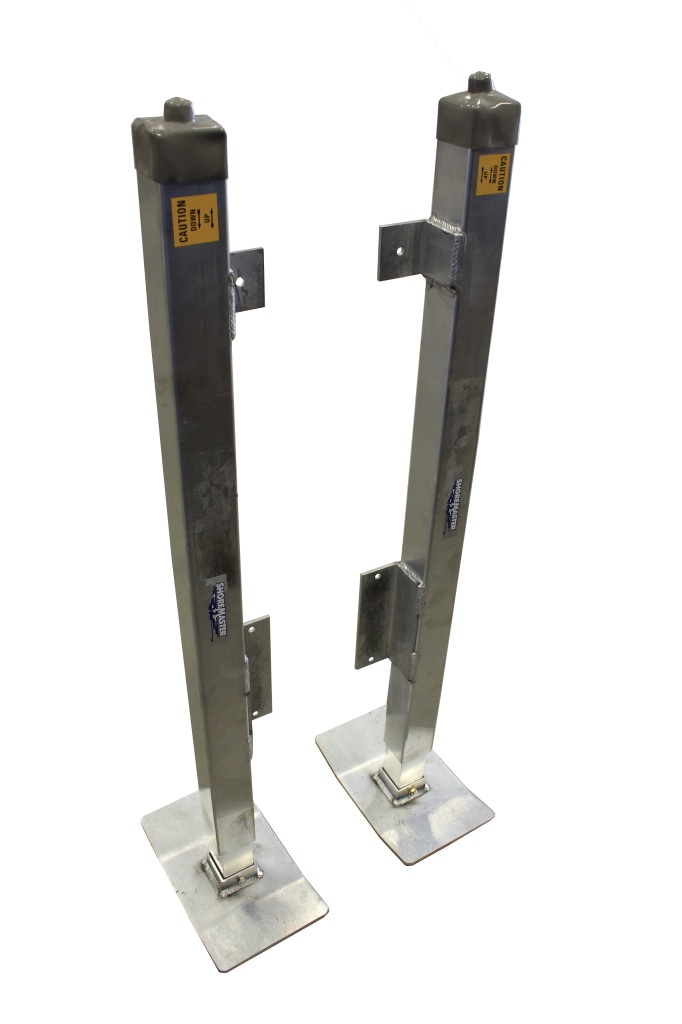
 You may not need them. That’s right, unless your water depth continuously fluctuates throughout your boating season you probably don’t need adjustable leveling legs for your boat lift. Wouldn’t it be a shame to pay for a boat lift that incorporates adjustable leveling legs into the boat lift design, when you don’t have a need for them? Some boat lift manufacturers are incorporating adjustable leveling legs into their boat lift design which forces customers to pay for them, even when they don’t have a need for them.
By incorporating adjustable leveling legs into every boat lift, these manufacturers are also adding to the boat lift owners’ maintenance burden, all for a boat lift accessory that may not be required by the consumer. ShoreMaster offers add-on adjustable leveling legs for their boat lifts, so ShoreMaster boat lift customers aren’t required to pay for, or maintain an accessory that they may not need, and, ShoreMaster’s adjustable leveling legs can be added onto existing ShoreMaster boat lifts, that a win for current and future boat lift customers.
You may not need them as much as you think you will. Even if your lakeshore experiences moderate water depth fluctuation throughout your boating season, you will likely find that you don’t need adjustable leveling legs as much as you think you do. For instance; if your water depth slowly drops by about 12 to 18” over the course of a boating season, you may be able to accommodate for the drop in your lakeshore’s water depth, by simply changing where you position your rack beam for entry and exit. For instance; if your starting water depth is anywhere near 4’, and you are using a vertical boat lift, you will likely be able to overcome an in-season water drop of about 12” simply by lowering your boat lift’s rack (not the entire lift) an additional 12” to allow entry and exit of your boat lift. It’s that simple, there may be no need to adjust the overall height of your boat lift at all. And unless your water depth is different from season to season, you probably will not need to adjust your lift legs after your first install. Why pay for something that will require more maintenance year after year if you really don’t need it?
They are not as adjustable as you might think. Adjustable Leveling Legs for boat lifts provide some conveniences that work well for a few boat lift owners, however it is important to note that consumers should always make sure that the amount of travel in any leg leveling system offered by their boat lift manufacturer is adequate for their seasonal water depth fluctuation. After all, built in boat lift leveling legs will do you no good if they don’t provide an adequate amount of travel.
The Case for Add-On Boat Lift Accessories
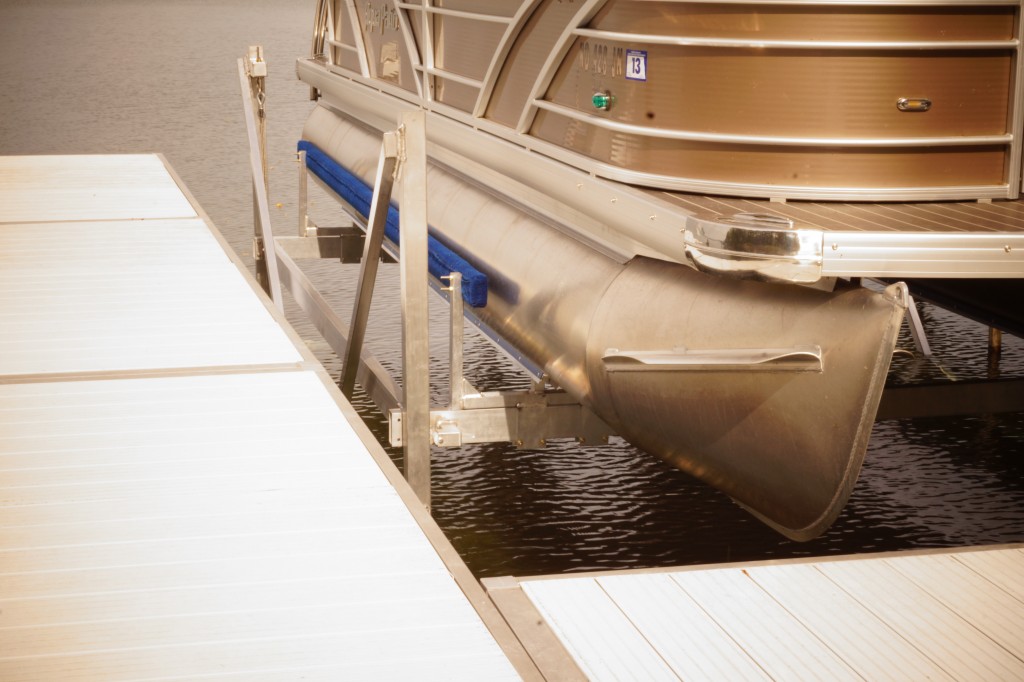
It’s pretty difficult to improve on the time-tested design of a boat lift like ShoreMaster’s vertical DVS boat lift. That’s because a boat lift’s design should be simple, extremely durable, and should not burden its owner with constant maintenance and tightening of bolts just to keep it together, and working properly. The evolution of a boat lift should be in its “add-on” accessories designed to meet the needs of specific customers. When you incorporate a boat lift accessory like adjustable leveling legs, into the design of the boat lift, you force the accessory on customers that may not need it, and reduce the boat lift’s overall simplicity.
Along with this reduction in boat lift simplicity comes more potential for problems, more need for maintenance, and less value for the customer. Unless your innovation is something that benefits all of your customers, you are just forcing them to pay for things they will never use.
With ShoreMaster’s adjustable dock legs, you can always add an adjustable leg leveling system as you need it. This way, ShoreMaster ensures that you are not spending your money on a boat lift accessory that you don’t need, and wasting your time maintaining an accessory that you didn’t require in the first place.
Key Takeaways
• Leveling legs help you keep a lift stable and aligned, which improves safety and lift performance.
• The right setup depends on lake bottom conditions and how much your water level changes during the season.
• A good leveling approach reduces frustration, because a stable lift is easier to use and puts less stress on the boat.
FAQs
Q: What do leveling legs actually do for a boat lift?
A: They help the lift sit evenly and securely so the boat is supported correctly. When the lift is level, operation is smoother and the boat is less likely to lean or shift.
Q: When do lift leveling issues show up most often?
A: They often show up after water level changes, storms, or when the lift is placed on uneven bottom conditions. If your boat starts leaning or the lift feels unstable, leveling is a smart first check.
Q: Can leveling legs prevent damage over time?
A: Yes, because uneven support can increase stress on both the boat and the lift structure. Better alignment usually means smoother lifting and fewer long-term wear issues.
Q: Should leveling legs be adjusted regularly or only when there’s a problem?
A: Many owners benefit from quick seasonal checks, especially when water fluctuates. Small proactive adjustments are usually easier than fixing a big imbalance later.


