Key Takeaways
There isn't one "best" boat lift motor; the appropriate choice depends on your waterfront and boating habits.
Lift capacity, usage frequency, and available power all influence the right choice.
Compatibility with your lift system is just as important as motor specifications.
A ShoreMaster dealer can help ensure the right fit.
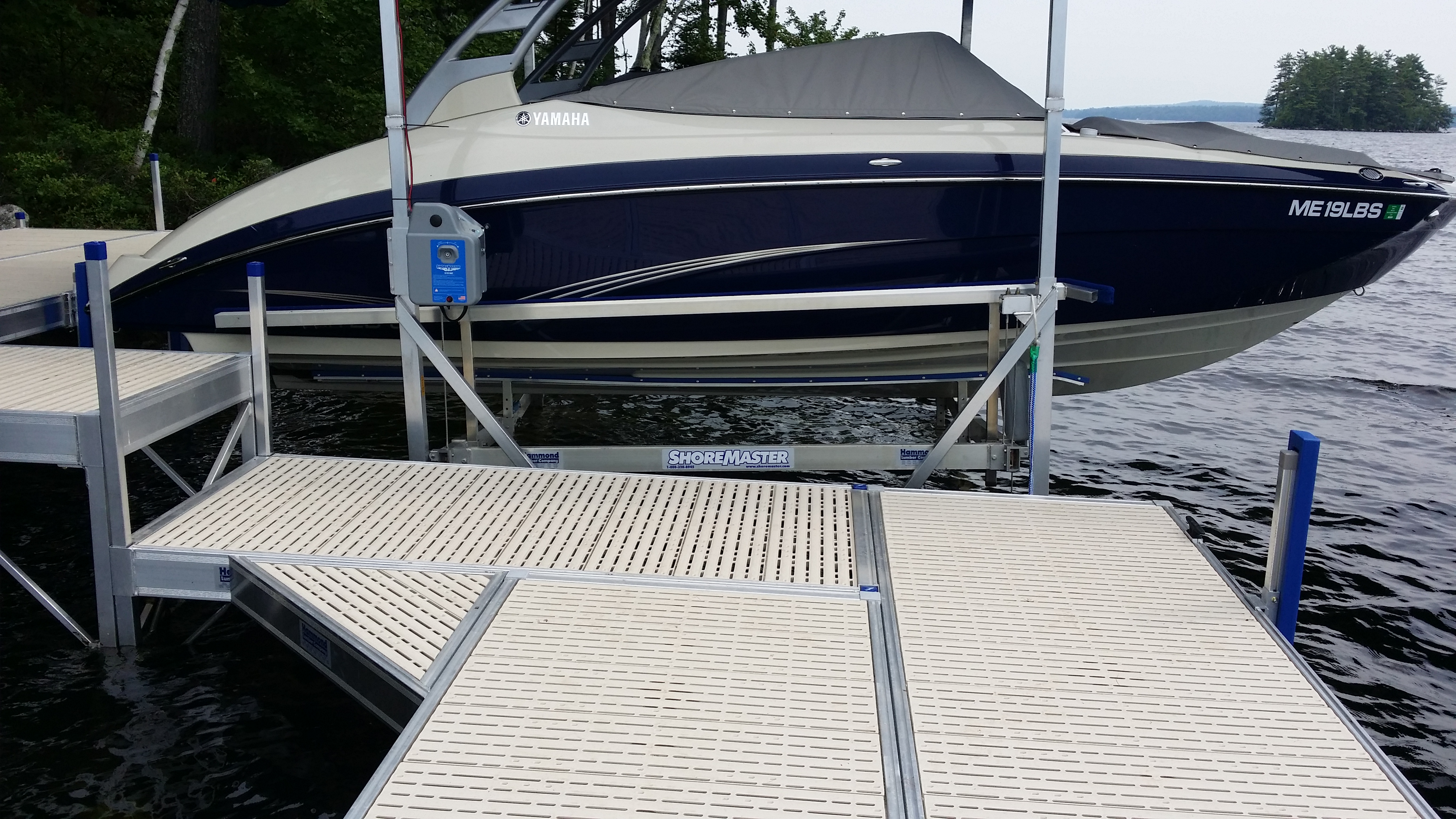
Why Choosing the Right Boat Lift Motor Matters
Ask anyone who’s lived with a manual lift long enough, and they’ll tell you that investing in a boat lift motor is one of the easiest ways to enhance everyday boating convenience. In addition to encouraging more spontaneous outings, equipping your boat lift with the appropriate motor ensures safe and efficient operation.
Choosing the appropriate motor also supports the long-term reliability of your waterfront investment. A compatible motor that’s perfectly matched to your lift minimizes maintenance concerns while prolonging the life of the entire boat lift system.
The Most Common Boat Lift Motor Types
Boat lift motors fall into one of two power source categories:
AC Motors AC (alternating current) motors run on shore power, typically a standard 120V electrical outlet installed at or near the dock. They're a common choice for permanent waterfront installations where dependable electrical service is already available. AC motors are generally more powerful, while DC motors are typically more efficient (GIE, n.d.).
DC Motors: DC (direct current) motors operate using 12V or 24V batteries, which can be charged using solar panels or trickle chargers. DC motors are extremely safe around water and ensure you can operate your lift during shore power outages.
Under these primary categories, there are different types of motors for different boat lift mechanisms. These include the following:
Direct Drive: These motors bolt straight onto the winch spline shaft, essentially replacing the manual turn-wheel mechanism. They feature fully enclosed gears that require virtually no routine adjustments or lubrication. While they raise and lower boats significantly faster than friction or belt-drive systems, the operating speed comes at a higher cost.
Wheel-to-Wheel: Also known as friction drive motors, wheel-to-wheel motors are the most affordable way to add motorized power to a manual lift. They operate by using a rubber roller to turn the crank wheel, making it easy to retrofit onto manual lifts. Because the big wheel stays on, you can manually crank it if you lose power.
It’s worth noting that no single configuration is universally better than another. The best choice depends on your existing lift, available power source, boat size, and manufacturer compatibility.
Factors That Should Guide Your Decision
Selecting the appropriate boat lift motor involves considering several key factors to ensure optimal performance and reliability. Use this boat lift motor buying guide section to narrow down your choices.
Power Source: An AC motor may be the ideal choice if you have a reliable electrical outlet on or near your dock. It offers faster lifting speeds but requires heavy-duty, marine-grade wiring and GFCIs for safety. For docks without a reliable power source, battery-powered DC motors are practical alternatives. They’re safer around the water and are often more energy efficient (The Malibu Crew, 2019).
Compatibility: The motor must match your lift’s drive system configuration (direct drive, wheel-to-wheel, or belt drive) and structural mounting points. You must also verify that your motor's voltage, shaft dimensions, and gear capacity match your existing boat lift drive system.
Lift Capacity: Choose a motor rated to handle the wet weight of your fully loaded boat, including all equipment and gear typically stored onboard. Always check the manufacturer’s specifications to ensure the motor’s torque and gear ratio align with your lift’s maximum capacity for safe, reliable operation. A good rule of thumb is to choose a motor with a capacity 20-25% higher than your boat’s wet weight.
Need help choosing a motor that fits your lift and waterfront setup?
Motor Features Worth Comparing
While capacity and compatibility are always the primary considerations when shopping for a boat lift motor, the day-to-day ownership experience is often defined by its features.
Ease of Operation: Many modern boat lift motors include wireless remote controls that let you raise or lower the lift from your boat. Some systems also feature smartphone app integration and programmable limits that stop the cradle automatically at your preferred height. These features can be especially useful when launching or docking alone or in rough water conditions.
Speed: If your dock is located on a busy main channel, a large lake, or tidal coastal waters, rough waves and wakes can slam your boat against the dock or the lift frame while docking. Faster lifting speeds can get the hull out of harm’s way before the next big wave hits. High‑speed motors also reduce the time your boat spends in transition, minimizing strain on the lift system and improving overall efficiency.
Weather Resistance: Waterfront environments are tough on equipment. Look for boat lift motors built with sealed gearboxes, weather-resistant housings, and corrosion-resistant components to guard against corrosion and moisture intrusion.
Ask dealers and owners (if possible) about the motor’s maintenance requirements. A boat lift motor that requires virtually no maintenance apart from charging batteries gives you the peace of mind that you can launch and store your boat as you please. Paired with excellent warranty coverage, you gain long‑term confidence that your investment is protected, unexpected repairs are minimized, and your lift will remain reliable season after season.
When Is It Time to Replace or Upgrade a Boat Lift Motor?
Recognizing the early warning signs of a failing boat lift motor can help you address minor issues before they interrupt your boating season.
Here are some common symptoms to watch out for:
Slower Operation: If the lift takes noticeably longer than usual to raise or lower your boat, the motor or related drive components may be experiencing wear. As electric boat lift motors age, internal components such as copper windings, brushes (in DC motors), and capacitors (in AC motors) wear down. This degradation increases electrical resistance, causing the motor to pull more current, overheat, and lose torque.
Unusual Noises: Grinding, squealing, clanging, or other unusual sounds during operation can indicate worn gears, bearings, or internal motor components that require attention.
Tripping Breakers: Repeated tripping of electrical breakers may indicate electrical issues, excessive motor load, or wiring problems that should be evaluated before continued operation. Ignoring this warning and continually resetting the breaker can permanently burn out the motor windings, destroy dock electronics, or create a severe shock hazard in the water.
Finally, if you find yourself repeatedly replacing switches, solenoids, or drive parts, upgrading to a new boat lift motor may be the more cost-effective long-term solution.
Common Buying Mistakes
Avoiding a few common mistakes can help ensure you choose a motor that's compatible, dependable, and well-suited to your waterfront.
Overlooking Compatibility: Purchasing a motor without verifying the drive shaft size, drum design, mounting system, or voltage requirements often leads to return shipping hassles or unsafe modifications.
Choosing Based on Price: Inexpensive non-marine motors often lack sealed components, marine-grade enclosures, or thermal protection, leading to rapid corrosion and early wear in challenging marine environments.
Skipping Dealer Guidance: Attempting complex electrical runs or custom motor mounts without professional guidance can result in unsafe dock conditions or voided manufacturer warranties.
Before making a final decision, consider the condition of your dock system, existing lift, boat lift accessories, and future boating plans. Thinking about the complete waterfront system, not just the motor, can help you make a purchase you'll be satisfied with for years to come.
Choosing the Right Motor for Your ShoreMaster Lift
ShoreMaster currently offers two primary lines of boat lift motors: the premium direct-drive LiftBoss series and the universal friction-drive LiftMate series. Both systems are engineered to integrate seamlessly with ShoreMaster’s proprietary Whisper Winch assembly or adapt to wheel-crank lifts from other brands, including Floe, Hewitt, and ShoreStation, among others.
Whether you're purchasing your first lift or contemplating a boat lift motor upgrade, an authorized ShoreMaster dealer can recommend a complete waterfront solution that fits both your property and your boat.
Enter your zip code at the bottom of this page to get a list of authorized dealers near you, or explore our Dock Builder to visualize how our solutions fit your shoreline.
FAQs
What is the best motor for a boat lift?
The best boat lift motor depends on your lift type, weight capacity, and how you prefer to operate your lift. We recommend consulting an authorized dealer to determine the ideal option for your specific setup.
Should I choose an AC or DC boat lift motor?
Choose an AC motor if you have a reliable 120V electrical outlet on your dock and prefer high-speed operation without managing batteries. Opt for a DC motor if your dock lacks shore power, experiences frequent outages, or requires low-voltage equipment for safety compliance. Both options deliver dependable performance when correctly matched to your dock’s electrical setup.
Can I replace my existing boat lift motor?
Yes, many boat lift motors can be replaced or upgraded to increase lifting speed, add modern remote controls, or restore reliable operation, provided the new motor is compatible with your lift's design, drive system, and electrical requirements.
Upgrades range from budget-friendly wheel-to-wheel drives to streamlined direct drive conversions. If you're considering a boat lift motor replacement, consult your lift manufacturer or a qualified dealer to verify compatibility before purchasing.
How do I know if a boat lift motor is compatible with my lift?
To determine compatibility, check your lift frame's mounting design, shaft dimensions, drive configuration, available power supply, and weight capacity. We also recommend consulting your lift's manufacturer documentation or an authorized dealer to confirm that a specific motor will work with your existing setup.
How long do boat lift motors typically last?
A boat lift motor's lifespan varies depending on usage, maintenance, and environmental conditions. While the average boat lift motor can last between 5 and 10 years, a premium, well-maintained system operating in freshwater can easily last 15 years or more.
Regular inspections, proper operation, and timely maintenance can help maximize reliability and extend the life of both the motor and the lift system.
Should I upgrade my boat lift motor when replacing my boat?
If your new boat is significantly heavier, it's worth evaluating whether your existing lift and motor are still appropriately sized. A dealer can help determine whether a motor upgrade or a larger lift configuration is needed to safely accommodate your new vessel.
References:
Gainesville Industrial Electric (n.d.). AC and DC Motors: Differences and Advantages | Types of Electric Motors, https://www.gainesvilleindustrial.com/blog/ac-dc-motors/
The Malibu Crew (August 6, 2019). Boat Lift - AC vs DC Power, https://www.themalibucrew.com/index.php?/forums/topic/71652-boat-lift-ac-vs-dc-power/


